
Segmentation
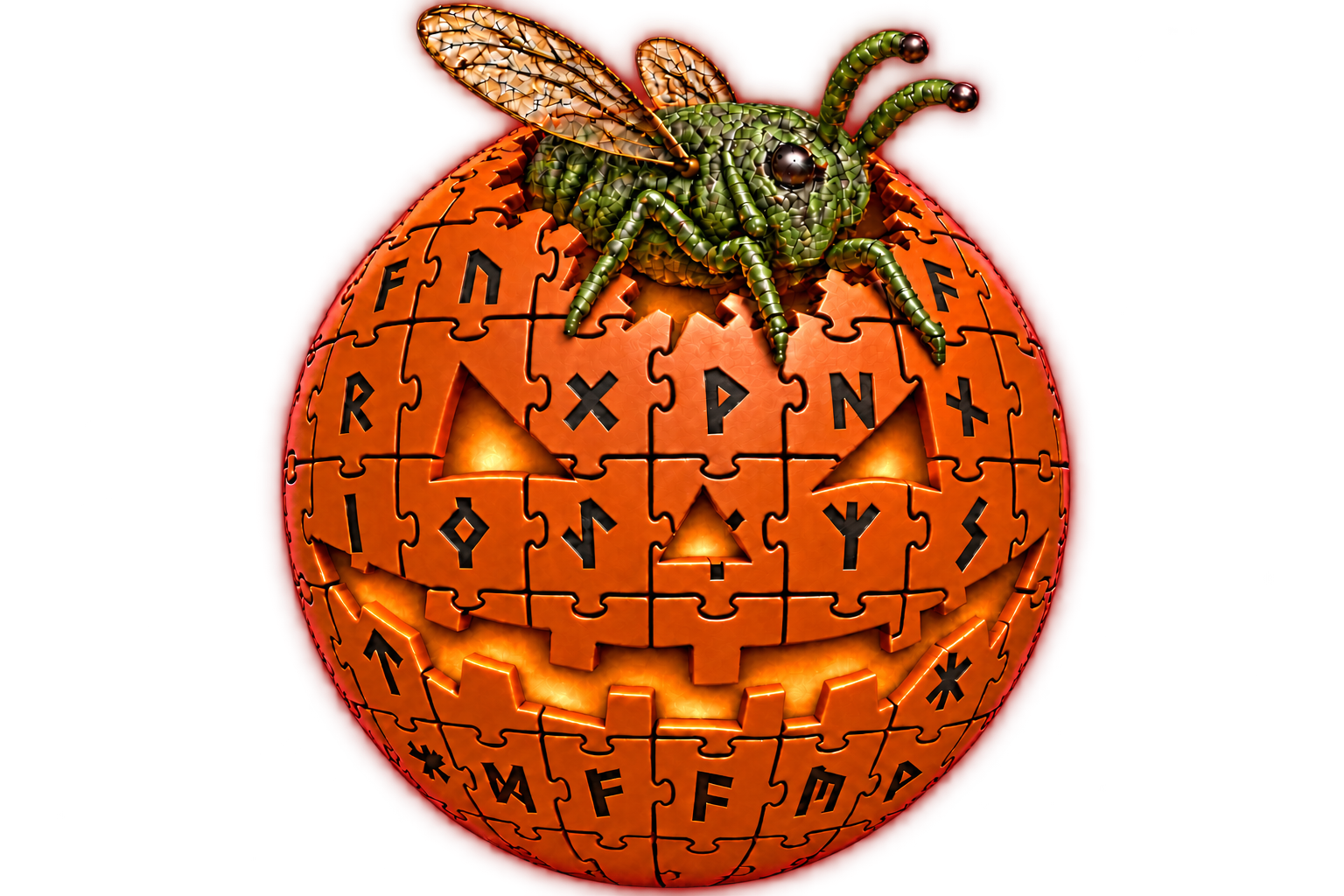
LP2 consists of multiple ‘sections’, easily recognized by marginalia and rubricated incipits. Stylistically reminiscent of illuminated manuscripts.
Delimiters
1:1 delimiter congruency is assumed to be maintained, as it is in LP1 and the two solved pages of LP2. Liber Primus has unique delimiters used for spaces, line breaks, paragraph, section end, etc. The dot delimiters also correspond to the ASCII control characters LF (Line Feed), CR (Carriage Return), and ETB (End of Transmission Block)
GP values
GP letter values can be used to construct prime words, phrases, and sentences/lines. Prime/emirp GP sums serve an important role as exemplified by 57.jpg
Artwork
LP contains various forms of both original and existing artwork. 1033.jpg, sometimes called the ‘cover‘ of LP, is a collage of four William Blake pieces: Newton, The Ancient of Days, and two versions of Nebuchadnezzar. Within LP2, ‘sections’ are ostensibly indicated by original marginalia. Specific pages also contain separate, page-relevant original artwork — such as cuneiform numerals or mobius strips. Additionally, several instances of edited artwork from known sources exist — such as the mayfly and oak tree.
n-grams
———————————————
LP text:
Counted unique bigrams: 840
Number of repeated bigrams: 837
Total number of repeated bigrams: 12952
Random text:
Mean counted unique bigrams: 840.9997
Std counted unqiue bigrams: 0.01731790980459247
Mean number of repeated bigrams: 840.9963
Std number of repeated bigrams: 0.060714989911882546
Mean total number of repeated bigrams: 12954.9966
Std total number of repeated bigrams: 0.0582103083654433
———————————————
LP text:
Counted unique trigrams: 9945
Number of repeated trigrams: 2508
Total number of repeated trigrams: 5517.0
Random text:
Mean counted unique trigrams: 10050.1294
Std counted unqiue trigrams: 38.91237406841171
Mean number of repeated trigrams: 2433.5345
Std number of repeated trigrams: 31.238108293397026
Mean total number of repeated trigrams: 5337.4051
Std total number of repeated trigrams: 67.1163422274337 (edited)
———————————————
LP text:
Counted unique quadgrams: 12825
Number of repeated quadgrams: 127
Total number of repeated quadgrams: 255
Random text:
Mean counted unique quadgrams: 12835.0622
Std counted unqiue quadgrams: 11.02112204632541
Mean number of repeated quadgrams: 117.2225
Std number of repeated quadgrams: 10.925364696430046
Mean total number of repeated quadgrams: 235.1603
Std total number of repeated quadgrams: 21.93048116002018
———————————————
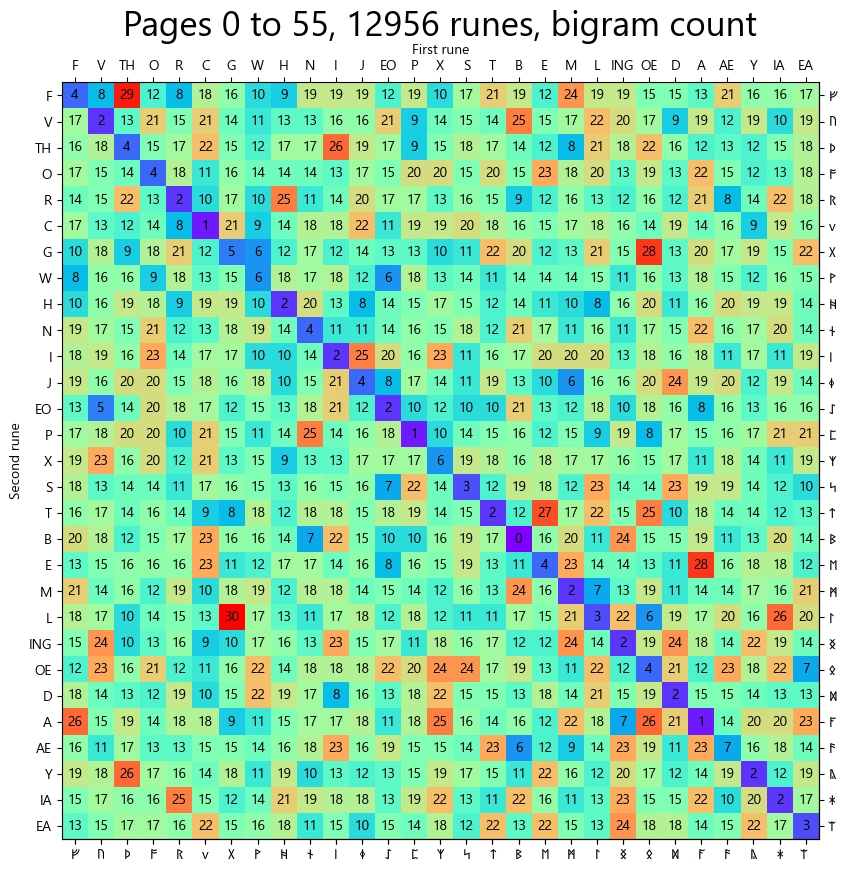
Bigrams
Single-rune words
In both LP1 and LP2, we see many single-rune words. Ostensibly, these can only be “A” or “I”. A third, less likely possibility also exists: “O”, used as an interjection/exclamation. William Blake, often referenced throughout the Cicada 3301 puzzles, often used “O” in this manner. When applying the Gematria Primus, it becomes apparent that single runes can be translated into two or three letter digraphs/diphthongs such as “TH”, “EO”, “NG/ING”, “OE”, “AE”, “IA/IO”, and “EA”. These additional characters make cribbing much more difficult due to the increase in possibilities that we have to work through.
Dis Legomenon
The 6-gram DJUBEI occurs twice in the corpus of unsolved LP pages, marking the longest such repetition and a possible point of attack.
Character Interchangeability
There is strong evidence to support the encryption was performed on the runes instead of the latin characters. This is due to not being able to go back and forth between runes and latin characters.
An example would be: ᛏᚻᚫᛡ -> THAEIO -> ᚦᚫᛡ
There is more information here.